Scientific Evidence On Scientific Fingerprint Analysis
History Of Dermatoglyphics Research
 1823- John Evangelist Purkinji a professor of anatomy at the University of Breslau, published his thesis researching fingerprint patterns classification.
1892- Sir Francis Galton a British anthropologist and a cousin of Charles Darwin, published his book, "Fingerprints", establishing the individuality and permanence of fingerprints.
1926- Harold Cummins, the Father of Dermatoglyphics and C.Midlo studied all aspects of fingerprint analysis, from anthropology to genetics and embryology perspective. In 1943 he published a book, "Finger Prints, Palms and Soles", a bible in the field of dermatoglyphics.
1943 - Graduated from Boston School of Medicine in Neurology. Harvard Graduate School professor and psychologist in cognition and education.He defines intelligence as: "an ability to solve problems or fashion products that are valued in one or more cultures."
The question is not "How smart am I?" but rather "How am I smart?"
It is how we learn, process, and understand information, His Theory of Multiple Intelligences consists of 8 types of intelligences, He published a famous book "Frames of Mind" in 1983
His theory was
Tulane graduate Fingerprint has very great potential to identify human and it was stated in 14th century ago in Al-Qur'an in the following verse: "Does man think that We cannot assemble his bones? Nay, We are able to put together in perfect order the very tips of his fingers." (Al Qur'an, 75:3-4) Few people were unfamiliar with the meaning of Tips of Fingers or fingerprint in human as well as their usage. Fingerprints began to discover. Through numerous researches, it was discovered that fingerprint of each people was unique. Each person has a series of fingerprints different from another. In return to this, fingerprints are currently used as guidance for identification process all over the world.
Harold Cummins*
-Chairman, Department of Anatomy, 1933-1960
-Chairman, Department of Microscopic Anatomy, 1933 - 1945
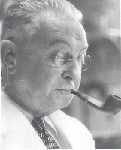
Dr. Cummins achieved world recognition as the "Father of Dermatoglyphics" or the scientific study of skin ridge patterns found on the palms of human hands. The findings of his lifetime studies and the techniques he developed, known as the Cummins Methodology, are accepted as important tools in tracing genetic and evolutionary relationships. The methodology has gained common usage in diagnosis of some types of mental retardation, schizophrenia, cleft palate and even heart disease. In other fields, Dermatoglyphics is used to aid ethnologic and population studies and to make positive identifications by police.
Frames Of Mind, 1983
Each person is a unique,blend of dynamic,intelligences which grow,expand and develop throughout life.
Rarely do they work, alone, rather intelligences,are combined in our activities, One can enhance another.
Intelligence is not singular. Multiple intelligences can be identified and described.
Teaching students about their intelligence strengths helps them be self-advocates in their learning.
Howard Gardner's Multiple Intelligences
Verbal/Linguistic
The ability to read, write, and communicate with words
The ability to use language to express one's thoughts and to understand other people orally or in writing
They tend to learn best by reading, taking notes, listening to lectures, and discussion and debate.
This intelligence is high in writers, lawyers, philosophers, journalists, politicians and teachers.
Logical/Mathematical
The ability to reason and calculate
Enables individuals to use and appreciate abstract relations
The ability to manipulate numbers, quantities, operations, etc.
Many scientists, mathematicians, engineers, doctors and economists function in this level of intelligences.
Visual/Spatial
The ability to think in pictures and visualize future results
The ability to imagine things in your mind's eye
The ability to perceive spatial information
Those with strong spatial intelligence are often proficient at solving puzzles. This intelligence is high in artists, photographers, pilots, painters and architects.
Musical/Rhythmic
The ability to create, communicate, and understand meanings made out of sound, the ability to compose music, to sing, and to keep rhythm & the ability to hear music, tones, and larger musical patterns.
Since there is a strong auditory component to this intelligence, they learn best via lecture. They will often use songs or rhythms to learn and memorize information, and may work best with music playing in the background.
Careers which suit those with this intelligence include
Bodily/Kinesthetic
Allows individuals to use all or part of one's body to create products, solve problems, or present ideas and emotions.
Using the body in highly differentiated ways for expressive, recreational, or goal directed purposes
People who have this intelligence usually enjoy acting or performing, and in general they are good at building and making things.
Careers which suit those with this intelligence include athletes, dancers, actors, surgeons, builders and soldiers.
Interpersonal-Social Intelligence
Enables individuals to recognize and make distinctions among others feelings and intentions
The ability to work effectively with others and display empathy
Careers which suit those with this intelligence include politicians, managers, teachers, and social workers.
Intrapersonal
The ability to distinguish among an individual's own feelings, to accurate mental models of themselves, and use them to make decisions about life.
The capacity to know one's self, Careers which suit those with this intelligence include philosophers, psychologists, theologians, writers and scientists.
Naturalistic-Physical World Intelligence
Allows one to distinguish among, classify, and use features of the environment
The ability to discriminate among living things and to see patterns in the natural world
Careers which suit those with this intelligence include wild Life Photographer , naturalists, conservationists, gardeners and farmers.
The Feasible Study on Identification of Children's Intelligent by Dermatoglyphic Pattern, http://en.cnki.com.cn/Article_en/CJFDTOTAL-ZGTY199902008.htm
Logical/Mathematical
The ability to reason and calculate
Enables individuals to use and appreciate abstract relations
The ability to manipulate numbers, quantities, operations, etc.
Many scientists, mathematicians, engineers, doctors and economists function in this level of intelligences.
1944- Dr Julius Spier Psycho-Analytic Chirologist published “The Hands of Children” he made several significant discoveries especially in the area of psycho-sexual development and the diagnosis of imbalances and problems in this area from the patterns of the hands.
1968- Sarah Holt, whose own work 'The Genetics of Dermal Ridges' published in 1968, summarizes her research in of dermatoglyphics patterns of both the fingers and the palm in various peoples, both normal and congenitally afflicted.
1970- USSR, Former Soviet Union use Dermatoglyphics in selecting the contestant for Olympics, and won over 50 Gold medals
1976- Schaumann and Alter's 'Dermatoglyphics in Medical Disorders' published. Significant investigations have also been carried out into the dermatoglyphics indicators of congenital heart disease, leukaemia, cancer, rubella embryopathy, Alzheimer's disease, schizophrenia, diagnosis of chromosomal defects.
1980- China carries out research work of human potential, intelligence and talents in dermatoglyphics and human genome perspective.
1985- Dr. Chen Yi Mou Phd. of Havard University researched Dermatoglyphics based on Multiple Intelligence theory of Dr. Howard Gardner. First application of dermatoglyphics to educational fields and brain physiology.
In 1986, a research was conducted by Dr. Rita Levi Montalcini and Dr Stanley Cohen, on correlation between Nerve Growth Factor (NGF) and Epidermal Growth Factor (EGF). The research found correlation between epidermal line pattern of skin and nervous growth system, showing correlation between fingerprint pattern and brain. They were granted with noble award.
Zhai Guijun, in his paper Report on Study of Multivariate Intelligence Measurement through Dermatoglyphic Identification, Beijing Oriental KeAo Human Intelligence Potential Research Institute Zhengzhou Dong Fang Zhou Intelligence Measurement and Consultation Research Center Wuhan University Oriental Intelligence Research & Test Center, published in April 15, 2006.
Dermatoglyphic analysis in borderline personality disorder, http://www.ncbi.nlm.nih.gov/pubmed/10097430
2000- Dr Stowens, Chief of Pathology at St Luke's hospital in New York, claims to be able to diagnose schizophrenia and leukaemia with up to a 90% accuracy. In Germany, Dr Alexander Rodewald reports he can pinpoint many congenital abnormalities with a 90% accuracy.
2004- IBMBS- International Behavioral & Medical Biometrics Society. Over 7000 reports and thesis published. Nowadays U.S., Japan, China, Taiwan apply dermatoglyphics to educational fields, expecting to improve teaching qualities and raising learning efficiency by knowing various learning styles.
The Phases E Of Fingerprint Analysis
Phase 1:
In the year 1880, early century of 19, Dr. Henry Faulds stated the theory of finger RC (Ridge Count) and its ability to distinguish the study method of inborn intelligences, but the element of the post analyzing was too simple.
Phase 2:
In the year of 1943, Dr. Harold Cummins stated the theory of PI (Pattern Intensity) rate measuring, RC value, 3 delta areas value, potency value, different finger patterns with its different position. This theory using PI value is more accurate compared with the first method that only used RC measurement.
Phase 3:
In 1986 Nobel Prize in physiology was awarded to Dr. Rita Levi-Montalcini & Dr. Stanley Cohen for discovering the correlation between NGF (Nerve Growth Factor) and EGF (Epidermal Growth Factor).